
A CONVERSATION WITH DOMINIC ANGERAME
THE FRAME IS A FACT
by Vincenzo Mancuso
How did you start filming?
I played around a lot with Regular 8mm in high school. When I went to college in Buffalo there was a film club with extra Bolexes. One afternoon, in about an hour, they taught me how to use a 16mm Bolex and gave me 400 feet of film to shoot whatever I wanted. This was around 1968.
At the time I knew I had a creative energy, but I didn't know where to put it. I was trying music, I was trying painting, and my theory was that if you couldn't do it on LSD, you shouldn't be doing it. So one day I took some LSD and went to Delaware Park with the Bolex, to see if what I was seeing was a hallucination or reality. I had a light meter, but I didn't know how to read it, so I threw it away. While I was filming the park, I noticed there was construction going on, with signs everywhere saying "danger". Danger is part of my name: D for Dominic, plus Anger, the first half of Angerame. So I followed the signs, they led me to a statue, I filmed it, and I ran out of film at that exact moment. When the film came back from the lab, the images had come out. I felt comfortable with the camera, and that's how I started shooting 16mm.
Did you know anything about experimental cinema at the time?
Very little. I had seen Stan Brakhage's films and read a little about experimental film. The first book I bought was Sheldon Renan's An Introduction to the American Underground Film. In Buffalo they were organizing a big program that would bring Paul Sharits, Tony Conrad and other important experimental filmmakers. They had bought all this equipment, but the filmmakers hadn't arrived yet, so they shared it with the students in the meantime. That was before I had any real sense of what experimental film was.
I was also experimenting with my Regular 8 camera. I put aluminum foil over the lens, poked holes in it and shot through the holes. You can see that imagery, with tiny dots all around, in my tribute to Kurt Kren. So I was trying to make experimental cinema without any real training.
In the Sixties everything was moving fast, with influences coming from everywhere. How did you find your way through all that?
In a way, not knowing much was my saving grace. I wasn't really exposed to experimental cinema until I went to the School of the Art Institute, and that gave me the freedom to explore my own imagery and find my own signature in that massive explosion of the Sixties, when Andy Warhol, Stan Brakhage and a whole host of other filmmakers were making movies. They were older than me and had been working in the medium longer. I was a newbie.
Then you moved to Chicago. How did your first film come about?
The film club in Buffalo gave me another 1,000 feet of film with free processing, but by then I was in Chicago and I had no camera. I saw someone filming on the sidewalk, asked him where he got his camera, and he told me the School of the Art Institute had cameras. So I enrolled in one course just to be able to use a Bolex.
My first completed film, 10x17, was a narrative about my wife and me living together for the first time in Chicago. I was in my early twenties, and I wanted to tell the inside story of what was going on in her head. I had ten rolls of film, but I counted eleven rolls shot and couldn't figure out why. It turned out the last roll I filmed had already been shot. When the film came back from the lab, that last roll was a superimposition: my wife on the beach and, upside down and backwards, her walking around Chicago. It was the perfect ending. That's when I gave up narrative. I realized superimposition in the camera was what I really wanted to do, and from there I went into experimental filmmaking.
Were you ever tempted to go back to narrative?
My introduction to alternative filmmaking was through European directors like Polanski and Truffaut, who were doing something different in cinema. But I realized I had no talent for writing scripts or structuring a story, so I gave up on narrative very early. It felt more natural to focus on the imagery, because the imagery tells the whole story of the filmmaker. It tells its own narrative.
Who mattered most to you at the Art Institute?
One teacher radically changed my filmmaking and my point of view: Robert Fulton. He taught me to carry the camera with me every day, so I would get used to it and it would become part of the way I moved.
How long did you stay in Chicago?
From 1971 to 1979. Besides school, I was distribution manager for a medical motion picture company, and I also worked for Encyclopaedia Britannica, so I picked up some business sense.
Why did you move to San Francisco in 1979?
My wife visited the Bay Area and fell in love with San Francisco. I had just graduated from the Art Institute in Chicago and was offered a job with the Chicago Transit Authority. She wanted to move to San Francisco, so I told her: if I'm accepted at the San Francisco Art Institute, we'll move. If not, I'm taking this job. It's the best job I've ever had, it pays a lot of money, and I can't see moving to San Francisco with no job and no reason to be there. Luckily, I was accepted into the graduate filmmaking program.
Once I was here, my filmmaking changed radically. Chicago is gray and dull. San Francisco is full of beautiful imagery, and I began combining those images with material I had shot in Chicago.
What kind of film scene did you find when you arrived?
A very vibrant one, especially at the Art Institute. The students were very diverse: there were people coming home from Vietnam and studying on the GI Bill, tuition was relatively cheap, and people came from all walks of life. The arts were booming in San Francisco. Lots of theaters showed underground film, and the San Francisco Cinematheque showed experimental work every week. There was a great deal of activity in the late Seventies and early Eighties. A new generation of filmmakers, outside the group that had started in the Sixties, was coming of age and exploring cinema in their own unique way. The punk wave was still going on. The scene was pretty explosive.
How did the collaborations with other filmmakers begin?
The graduate film program was small, so I would meet with colleagues like Toney Merritt and Dean Snider in coffee shops after class. We'd drink wine and talk about our work, and before we knew it we were working on each other's films, or at least having conversations that stimulated each other's creativity. The collaboration happened outside the institute rather than inside it, and it brought together very different points of view and aesthetics.
What was your first contact with Canyon Cinema?
When I was in Chicago, I finished Neptunian Space Angel and sent my work to Canyon for distribution. I looked at their catalog and thought: look at all these people making this work. I never imagined I would end up running Canyon Cinema. In 1980, while I was in the MFA program, I started working there. It was sort of the West Coast center of experimental filmmaking. I met people like Curt McDowell and many local filmmakers I had never heard of, I discovered Robert Nelson's work, and I got to know people like Bruce Baillie and Chick Strand. Just meeting these people and talking with them opened up my whole vision.
What state was Canyon in when you arrived?
It was in a very difficult situation. The pay was so bad that most employees left after two years, and each one had their own way of doing things. With the business sense I'd picked up in Chicago, I could see right away that the place was a total mess. There was a huge correspondence folder full of letters nobody had ever answered. These people were interested: they wanted catalogs, they wanted information. Michael Wallin and I sat down and said: we have to run this place like a business, otherwise it's going to fold. It had gone from four employees to just the two of us.
Then I pushed to publish a catalog. I think it came out in 1982. Canyon hadn't published one in seven years, and the Film-Makers' Cooperative in New York hadn't published one in a long time either, so nobody knew what the inventories were. We told the members a catalog was coming out, they brought in their new work, and we ended up with a 300-page catalog. Business started booming, because finally everybody knew what films we had and what they cost.
What reputation did Canyon have at that time?
Canyon was seen as a distributor of mostly West Coast and mostly gay artists: George Kuchar, Curt McDowell, Kenneth Anger and many local filmmakers. San Francisco was a center of the gay rights movement, and the gay scene here has always been politically dynamic, so that was mixed in too. People also saw us as hippies: a bunch of hippie films, a bunch of gay films. They had put us in a box, and it wasn't correct. The catalog proved we were a mixture of all sorts of people. When I went to New York to promote Canyon, people felt we had finally broken out of being just a regional distributor.
You also distributed Barbara Hammer.
Yes, we distributed her films. She started in San Francisco with her early films, Dyketactics and Menses, and then her career began to blossom.
How would you describe the scene in San Francisco in those years?
During the Eighties, and up through the Nineties and the turn of the century, San Francisco became the place for experimental filmmaking. There were programs at the Cinematheque, Craig Baldwin was running Other Cinema, several independent theaters that don't exist anymore showed experimental films, and the San Francisco International Film Festival showed experimental work too. The city attracted people drawn to the hippie life, people drawn to the gay community, and people who simply loved the Bay Area.
And it wasn't only the hippie and gay scenes. When I started at Canyon, a lot of our income came from punk rock films, made around the scene that was happening here, at places like the Mabuhay Gardens. The rest of the country became interested in that too.
In the Eighties there was an energy reminiscent of the late Forties and the Fifties, when San Francisco really was the center of experimental filmmaking and many poets began making films. We had all the films from the Poetry Film Festival, and a lot of poets put their films into distribution with us. So Canyon became the place people could focus on, because we were still in business and doing pretty well.
Canyon itself grew out of that earlier scene.
It started around 1961 or 1962 with Chick Strand and Bruce Baillie, as a place for people who wanted to show their films to the world.
Later the office was in Earl Bodien's apartment, and they had maybe forty or fifty films.
Through the Canyon Cinemanews people realized the films were available, and Canyon kept growing until his apartment couldn't hold any more. In those years Robert Nelson was creating films, and Bruce Conner was making movies and a name for himself.
These filmmakers became part of Jonas Mekas's New American Cinema, and they were all based here in the Bay Area.
As director, what kind of relationship did you build with these artists?
Canyon became a major part of my life. One of the first things I did was call Chick Strand. She said: the place is yours, do what you want with it, anything you can do to keep it alive is great. Bruce Baillie gave me the same encouragement. It wasn't really a collaboration. Mostly we talked on the phone about the origins and the spirit of Canyon: an organization of filmmakers looking after themselves, a kind of union of experimental filmmakers.
Slowly I won over the filmmakers, because we were paying them. Bruce Conner had his films with someone else and wasn't sure I knew what I was doing, so he gave us just two films. Whenever a filmmaker asked for royalties, we sent a check. Bruce would ask, and the next day he had it. No waiting a month. Little by little I won his confidence. The same happened with Kenneth Anger. He came to visit the office, we hit it off almost immediately, and once I had his confidence we became the sole distributor of his work.
I trained the staff to take care of the prints, and to remember that the filmmakers came first, the renters second, and we came third. Slowly we began to pay ourselves better. I stayed for thirty-two years, most of Canyon's history.
You mentioned Bruce Conner. What was your relationship with him, and how did Battle Stations come about?
Bruce and I became business friends, I guess you could say. He knew he could trust me and confide in me. His films came to account for 15 to 20 percent of Canyon's business. He was our biggest renter, and much to his chagrin, he was helping the organization survive.
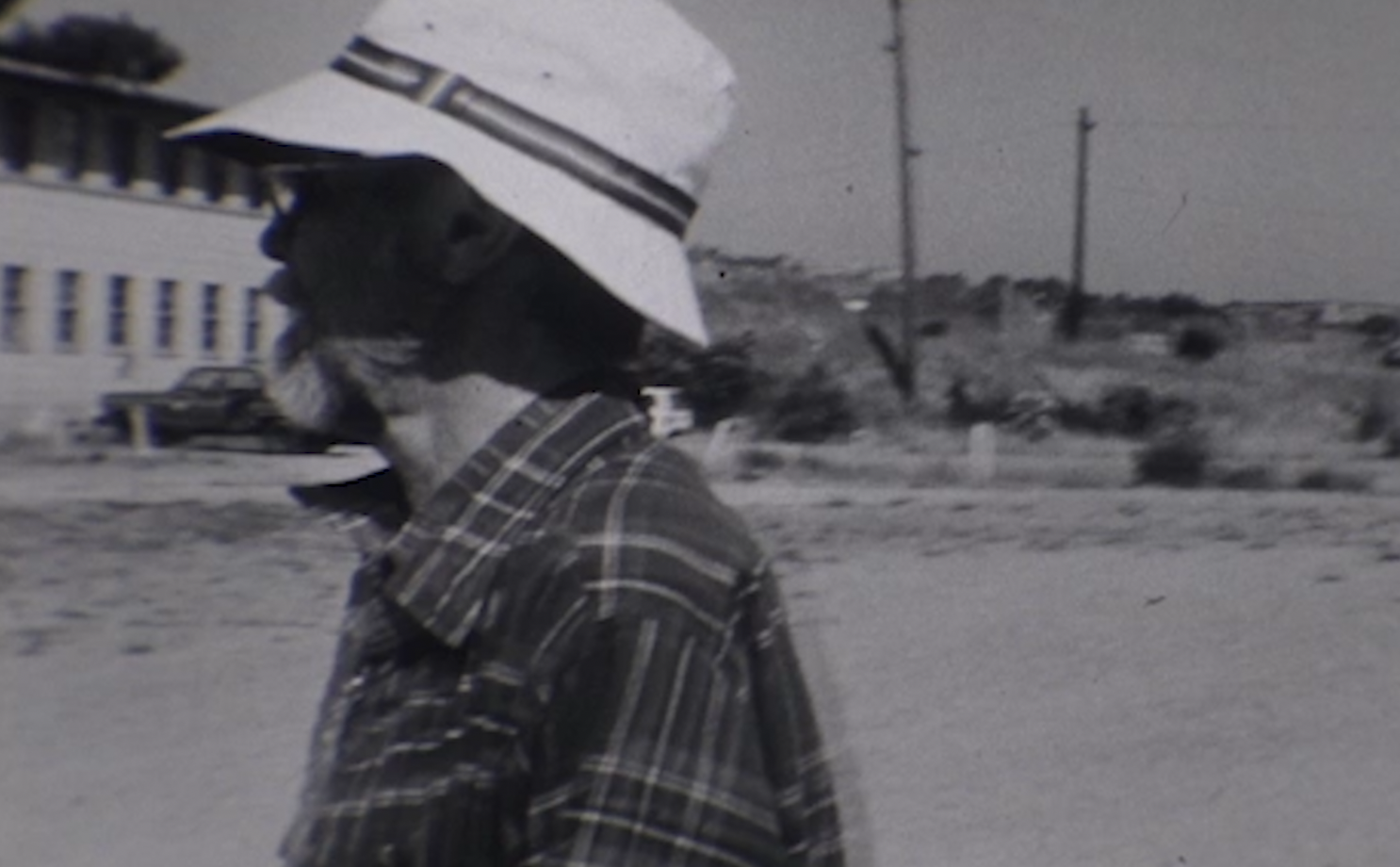
One year the Cinematheque moved to the Naval Shipyard, a toxic waste site, and offered $500 grants for site-specific films about the new location. I got one and told Bruce. He was convinced there was radioactivity, because paint had been stripped from old submarines and was still lying around. So I picked him up in my old Mercedes, he brought his Geiger counter, and we drove to the shipyard. We walked around testing for radioactivity while I filmed him, and we found none, which calmed his fears. He was actually happy with the film. As he saw it, it was just Bruce walking around doing nothing.
What kind of friend was he?
A difficult one. We had many screaming matches. He would call me at home at any hour to complain about things I had no control over. He didn't like people making money from artists' work: the artist should get most of the money. So if you were making money from his, he made you really work for it. He wanted to be told every time we cut a damaged frame out of one of his prints. That's impossible. In a ten-second film every frame matters, but in a longer film nobody will notice one missing frame.
What role did Bruce Conner play in the scene of those years?
He was big in the Seventies, and he became part of the punk scene too: America Is Waiting and Mongoloid became something like punk rock hits. And he was with us when we rebelled against the Cinematheque, which kept ignoring local filmmakers. He joined us the night we took over one of their screenings to show our own films. That's how the No Nothing Cinema started, and later he would come down there and play the organ while we cooked sausages on a barbecue. We were lucky we didn't get trichinosis.
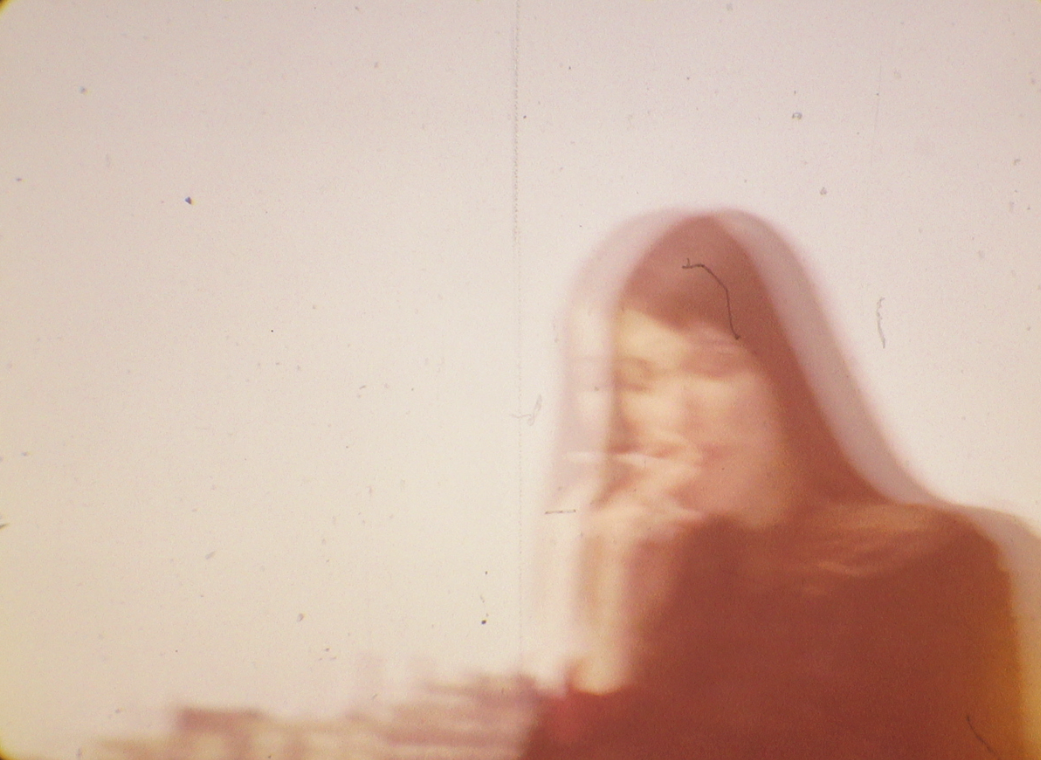
In 2024 you started making the diary films. How did that begin?
I had finished a major work, Aeon, and on my editing desk there were all these tiny films I had never released, because I didn't think they had enough substance. The first diary was a two-minute piece shot at my teacher Robert Fulton's estate in Connecticut. It was a flashback into a different time, seen with the eyes of 2024. Fulton has passed away, his children are grown, everything has changed, but the memory is very vivid: the way he presented his work, him as a pilot. I thought: this has value for me, I don't care if nobody else likes it.
Then I started looking for other 16mm and 8mm footage. There were two rolls I shot at the No Nothing Cinema, the space my friend Dean Snider helped found. That footage has historical value, if nothing else. It was part of the scene.
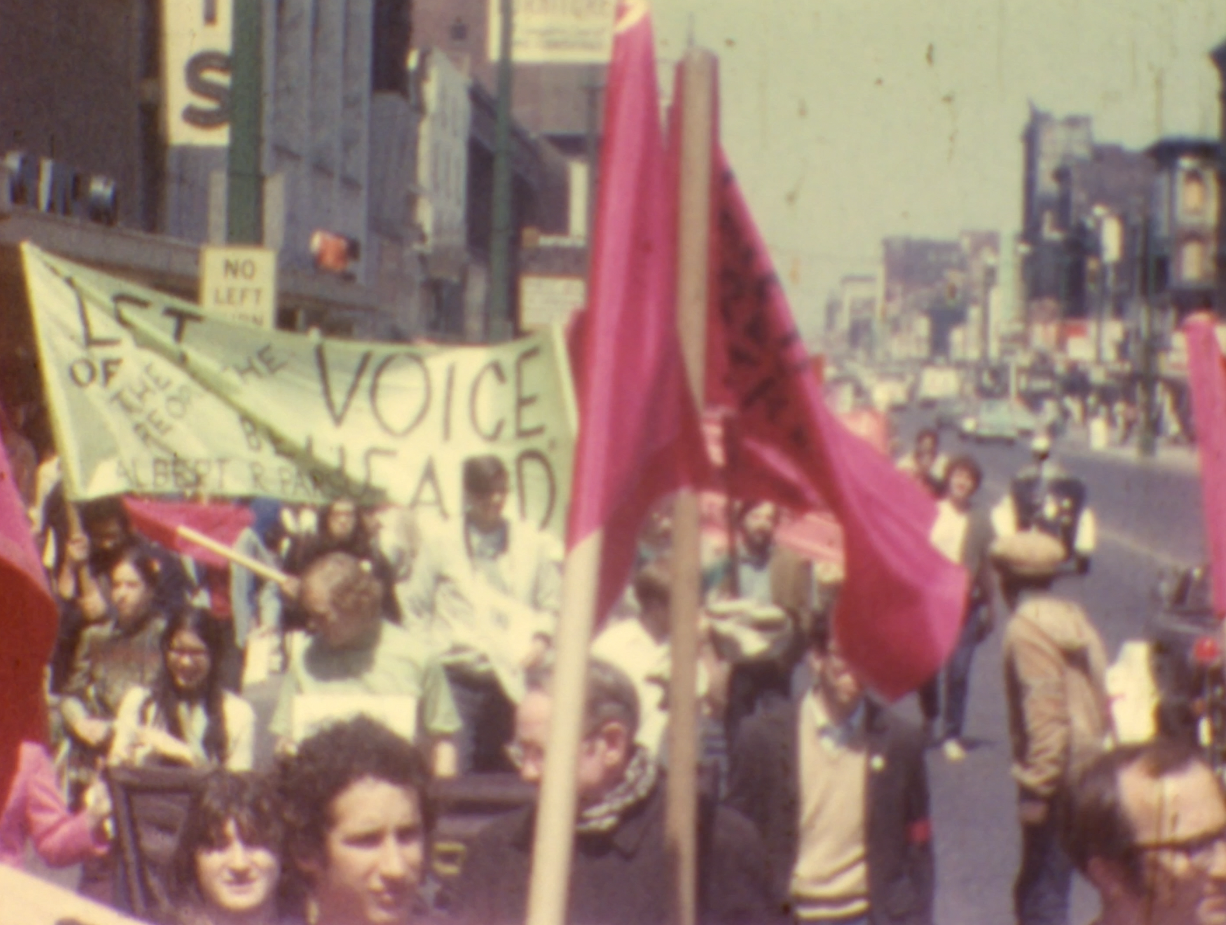
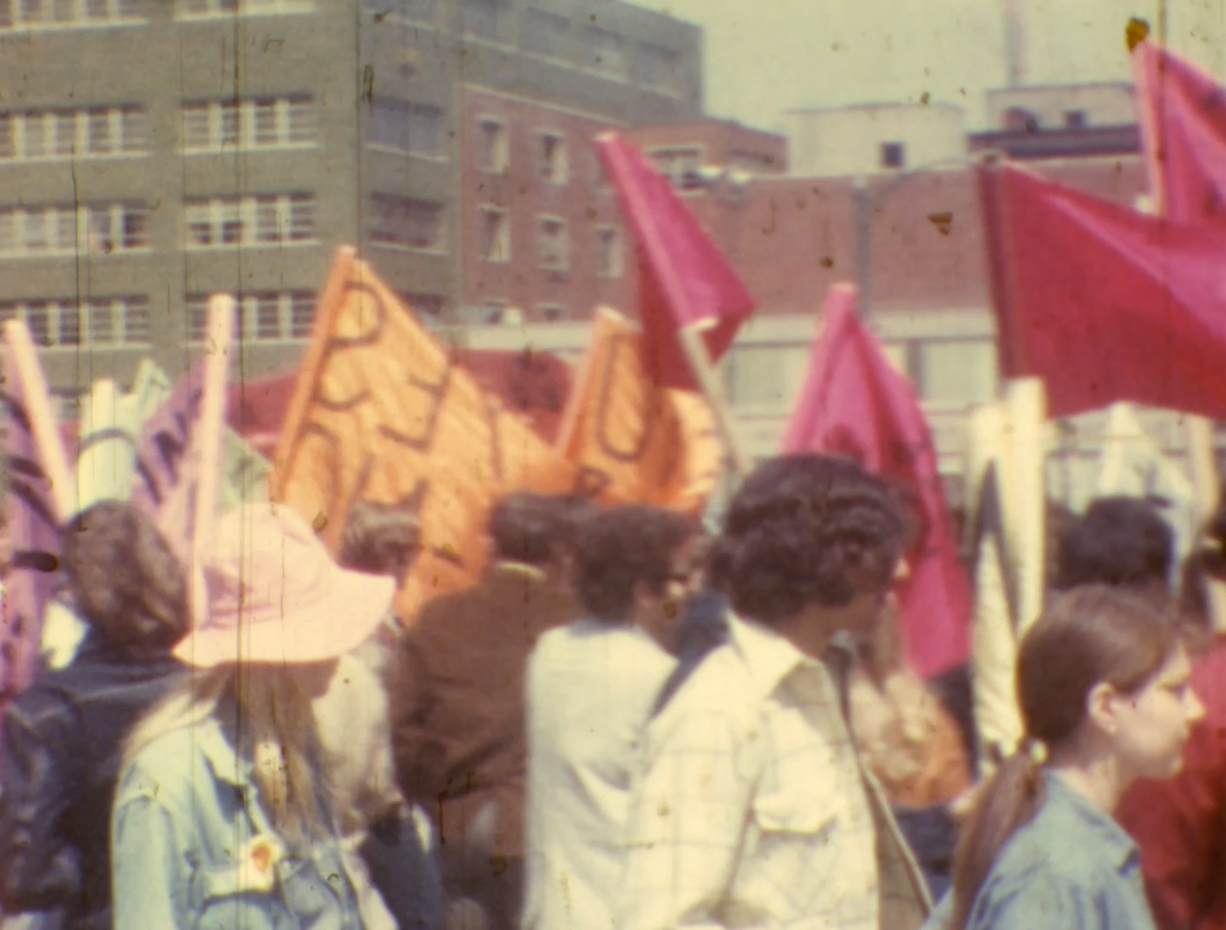
Some go back to my student years. Buffalo 1969 is an anti-war demonstration I shot on Regular 8 when I was in college there. I was very politically active. I knew there was going to be a demonstration, so I went down with my camera.
For me the diaries are like a writer's journal, or the lines a poet writes that don't fit into a particular poem. The lines are still valid. So I take those lines and turn them into diary films.
So you often filmed without having a film in mind?
Yes, just for the hell of it. At one point I carried my camera almost all the time, filming things I found interesting, or not interesting. A lot of it didn't fit anywhere.
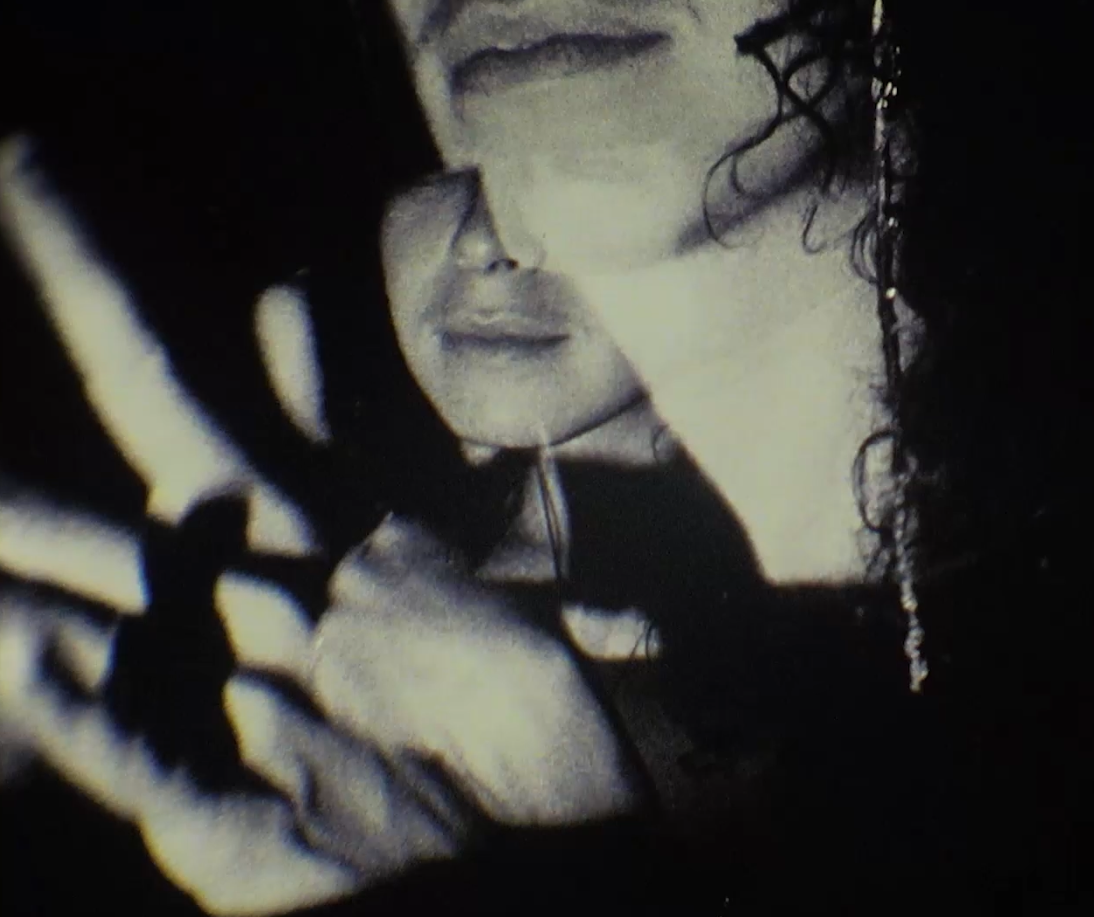
Flashbacks is one example. For several years I had collected the beginnings of the rolls, the part that gets struck by sunlight as you load the camera. One day I stuck them all together and realized most of them were my wife. I had to stop. It was too emotional, I was too attached to the footage. After she passed away, it took years of distance before I could make the film, which is mostly dedicated to her.
Looking at that material with fresh eyes, even though it was shot decades ago, I found great relief in letting these fragments become entities with a life of their own. And people seem to enjoy the informality with which the diaries are made. I have now digitized everything I have on 16mm and Regular 8, so there are more diaries buried in that archive.
Why do you still work on celluloid?
I have shot digital, and I'm not happy with much of it. The first reason is contrast: even in post-production, digital can't give me the darkness I get on film. Around 1984 I switched to black and white, using a high-contrast stock that Kodak said was only meant for optical soundtracks and wouldn't work in a camera. A friend gave me a few rolls. To see how black I could get it, I filmed the darkest thing I could find: people tarring roofs, with the sunlight sparkling on the tar. The contrast blew me away, and I have shot on that 10 ASA stock for decades.
The second reason is that in digital you don't really have frames, you have seconds. To my knowledge you can't shoot a single frame at a time, or maybe nowadays you can. Filmmakers talk in feet, not in hours: "I have 1,800 feet." The third is that you can't superimpose in the camera. In digital I have to do superimpositions in post-production, with a software program. For me the magic happens in the camera, where the light hits the film and brings out the images in a way I never expected. I prefer not having expectations and being surprised by how the film comes out. With digital you're just recording data, not imagery.
That said, I have used my iPhone in my latest work, because traveling with a Bolex, going through airport X-rays and being stopped because they think the camera is a gun is just too much.
Why do you think so many young artists are going back to film today?
That was the big discussion at my recent show. They grew up in a digital age, but they want something tactile, something that involves their body: winding the camera, hearing the frames go by, learning how the sun hits the film. With digital everything is automatic, and the camera compensates for the light. They want to see the frames, not data on a screen.
It's also about the way you watch film. With a projector there's a shutter going by, and you're put into a hypnotic trance. On a computer you're not. A real cinematic experience is very rare today, and nobody is making projectors anymore. And then there's the material itself. With digital, I spend half my time looking for files I thought I'd lost. With analog, I have the film. I can't delete it. I may put it somewhere I can't find it, but it exists. The frame is a fact. With digital there is no physical frame, so you only have a concept of a fact. When the new technology came along, we were too quick to throw the baby out with the bathwater.
Is it the market that pushes us to keep changing technology?
Yes, it's self-perpetuating obsolescence. And what's the goal? To get as perfect as the celluloid frame, and the technology will never get there. Along the way, very subtle things are taken away from us, like the space between the frames, and we don't even notice. It's like a TV commercial with no space between the sentences. Where's the breath? We no longer have space to reflect, no space for our eyes, our minds and our ears to breathe. Digital makes things accessible, and that has great value. But on the internet we're surrounded by nonstop noise. There's no filter, and we need filters.
Dominic Angerame was born in Albany, New York, in 1949, trained at the School of the Art Institute of Chicago, and has lived in San Francisco since 1979. Working almost exclusively in 16mm, he has made more than sixty films since the late 1960s, including a series of city symphonies tracing San Francisco’s changing face. His work has screened at the Toronto and New York film festivals, the Viennale, Rotterdam, the Museum of Modern Art, and the Whitney Biennial. He served as executive director of Canyon Cinema from 1980 to 2012, co-founded No Nothing Cinema in 1982, and has taught at the San Francisco Art Institute and UC Berkeley.
Vincenzo Mancuso is a documentary filmmaker whose work centers on audiovisual documentation, with a particular focus on social narratives and collective memory. He leads DocumentaFilm, a documentation project, and curates an archive of orphan films that collects and preserves footage from the 1920s through the 1980s. He is the founder and curator of ANALOGICA.
Stills from:
Film Diary #12: Buffalo 1969
Consume
Battle Stations--A Navel Adventure
Flashback
_________________________________________
© August 2026 / Vincenzo Mancuso / Analogica